
What Separates Commercial Truck Bodies from Light-Duty Builds
Choosing the wrong truck body for a heavy workload is an expensive mistake that compounds over time. A commercial truck body and a light-duty build may look similar on the lot, but they are engineered to entirely different standards of load capacity, structural durability, and operational longevity.
The differences show up not in the brochure but in the field, under sustained daily use, heavy payloads, and the kind of punishment that separates a truck that lasts a decade from one that starts failing in year three.
Material Thickness and Grade in Truck Bodies
The first and most fundamental difference between commercial and light-duty truck bodies is the steel specification. Light-duty bodies are typically fabricated from thinner gauge steel with lower yield strength.
Commercial truck bodies use heavier-gauge, higher-strength steel in every structural member: floor plates, side panels, crossmembers, and body posts. Higher-yield-strength steel resists permanent deformation under heavy point loads and repeated impacts.
Thicker gauge panels resist denting, cracking, and fatigue from vibration and impact loads that accumulate on high-demand job sites. These material differences are not visible at delivery, but they determine how the body holds up over years of hard use.
Structural Design Standards That Define Commercial Truck Performance
Light-duty builds are designed around assumptions of moderate, intermittent loading. Commercial truck bodies are engineered for continuous heavy loading, repeated crane cycles, and sustained operation under adverse conditions.
Crossmember spacing, gusset placement, and body post sizing are all increased in commercial builds to distribute load more broadly across the structure. The requirements for high-impact jobsites go well beyond what light-duty structural design accounts for.
Buyers who apply light-duty structural assumptions to heavy commercial applications end up with bodies that deflect, crack, and fail at mounting points, weld joints, and floor panels long before the chassis reaches the end of its useful life.
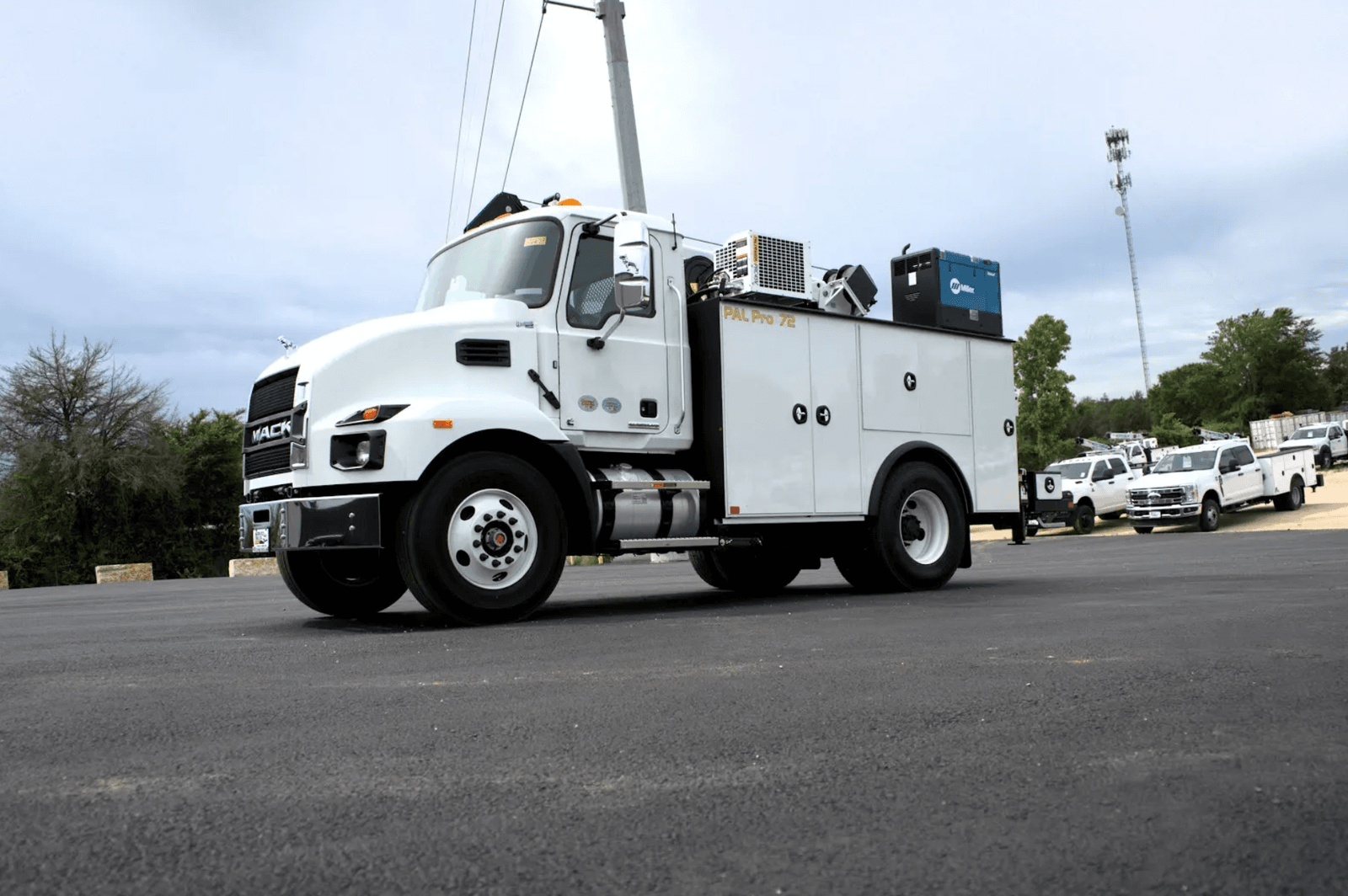
Photo: Service Truck Depot
Weld Standards in Commercial Versus Light-Duty Truck Bodies
Weld quality is where many light-duty builds reveal their limitations most clearly. Commercial truck body fabrication follows documented weld procedure specifications with certified welders and defined inspection requirements at critical joints.
Light-duty builds are more frequently fabricated to general commercial standards, with less rigorous weld procedure control and limited post-fabrication inspection. The difference in weld quality translates directly into structural performance under load.
Poorly built structures that fail under heavy workloads almost always exhibit early cracking at weld joints, particularly at body-to-subframe connections, compartment corner welds, and crane-mount attachment points. These are precisely the joints that carry the highest structural loads and have the least tolerance for weld defects.
How Commercial Truck Bodies Handle Crane Integration
Crane integration on a commercial truck body involves engineering decisions that light-duty builds are not designed to accommodate. Crane mount design, subframe reinforcement, and outrigger attachment must all be engineered to the specific crane model, boom length, and rated lift capacity.
The crane base transmits enormous moment loads into the body structure during lifts, particularly at maximum radius. Commercial truck bodies distribute those loads through reinforced mount plates, gusseted crossmembers, and subframe sections sized for the application.
Light-duty builds that have cranes bolted on as an afterthought, without proper structural integration, develop cracks at mount points and progressive structural failure under repeated crane cycles.
Floor Ratings and Load Capacity Across Commercial Truck Applications
Floor load capacity is a specification that buyers frequently overlook until it becomes a problem. Commercial truck body floors are rated for the concentrated point loads that heavy tooling, parts, and equipment create in service.
A transmission assembly, hydraulic power unit, or heavy compressor creates a point load that can easily exceed the floor rating of a light-duty build, leading to permanent deflection, cracked welds at crossmember attachments, and eventual floor panel failure.
Commercial floor designs use heavier plate, closer crossmember spacing, and reinforced panel-to-crossmember connections to handle these loads without deflection. Knowing how to evaluate heavy-duty builds starts with asking for the floor load rating and verifying that it exceeds the heaviest concentrated load the truck will carry.
Compartment Construction and Hardware in Commercial Truck Bodies
Compartment construction quality separates commercial and light-duty builds at the detail level. Commercial truck body compartments use heavier gauge panel material, fully welded corner construction, and industrial-grade door hardware rated for hundreds of thousands of open-close cycles.
Light-duty compartments frequently use lighter panels, mechanically fastened corners that loosen over time, and hardware rated for residential or light commercial use. Door alignment on light-duty builds drifts as the body flexes under load, leading to sealing failures, latch wear, and doors that no longer close flush.
Commercial hardware maintains alignment and sealing integrity through years of heavy use because the compartment structure itself is rigid enough to hold its shape under operational loads.
How Commercial Trucks Improve Productivity Over the Long Term
The productivity case for commercial truck bodies over light-duty builds is straightforward. How commercial trucks improve productivity comes down to availability, reliability, and capability. A commercial truck body that holds up under daily heavy use stays in service longer between repairs.
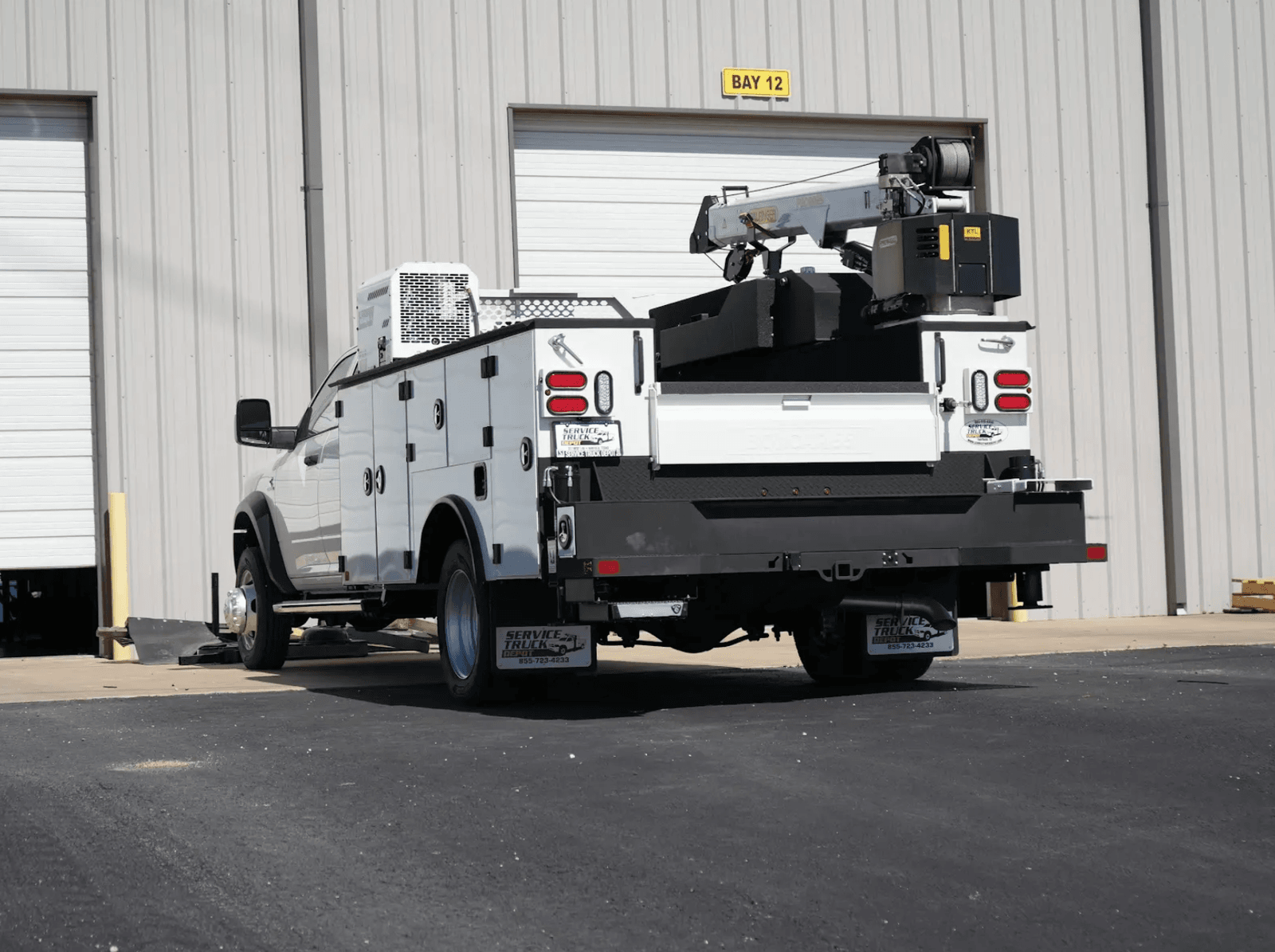
Photo: Service Truck Depot
A light-duty build running beyond its design limits creates unplanned downtime that ripples through the entire fleet schedule. Over a five-year horizon, the higher initial cost of a commercial build is routinely offset by lower maintenance costs, fewer repair events, and longer body service life before replacement is required.
Buyers who evaluate total cost of ownership rather than purchase price alone consistently reach the same conclusion: commercial builds deliver better value for heavy applications.
Corrosion Protection Standards in Commercial Truck Bodies
Commercial truck bodies operating in harsh environments require corrosion protection systems that go beyond a single topcoat of paint. Surface preparation, primer selection, topcoat specification, and undercoating must all be matched to the operating environment.
Commercial fabricators use multi-stage finishing processes that include surface abrasion or blasting, weld-through primer at joints, epoxy or zinc-rich primer as a corrosion barrier, and powder coat or high-build topcoat for abrasion resistance.
Light-duty builds frequently skip intermediate coating steps to reduce cost and cycle time. Those shortcuts show up as rust at weld seams, corrosion under mounting hardware, and topcoat adhesion failure within the first two years on trucks operating in corrosive environments.
Choosing the Right Build for the Application
At Service Truck Depot, we build custom truck body upfits and builds to commercial standards across every application we serve. From unmounted cranes and truck beds to our purpose-engineered Boxcar 55 Series and fully configured work trucks, every build we deliver is fabricated to the structural, weld, and finish standards that heavy commercial applications demand.
Our team works through the specific payload requirements, operating environment, and duty cycle of each customer's application before a single spec is finalized. Contact us today to find out what a commercial-grade build looks like for your fleet.
Read More Posts